Client
Royal Dornoch Golf Club
Contact
Neil Hampton (RDGC General Manager)
Dates
2025
Value
£13.9m
Area
2160 sqm
Status
Completed
“From the outset the team at Keppie had grasped the brief and produced an innovative way to address the question, while taking us along with them. The inclusive attitude to the design helped us understand our building and when it was opened for business it felt like an old pair of slippers as we knew it so well.”
Neil Hampton, General Manager, Royal Dornoch Golf Club


Awards

RICS Awards 2026, Scotland Region
Commercial Development - Shortlisted

AJ Architecture Awards 2026
Leisure - Shortlisted

Scottish Design Awards 2026
Commercial/Office/Hotel Building or Project - Nominated
Creating a Clubhouse Worthy of one of the World’s Greatest Golf Courses
Royal Dornoch Golf Club is internationally recognised as one of the world’s finest golfing destinations. Ranked No. 2 globally by Golf Digest, the Championship Course attracts visitors from across the world, yet its previous clubhouse no longer reflected the quality of the experience or the ambitions of the Club.
Following an international design competition, Keppie was appointed to design a new clubhouse that would honour Royal Dornoch’s remarkable heritage while creating a contemporary destination for members, visitors and the wider community.
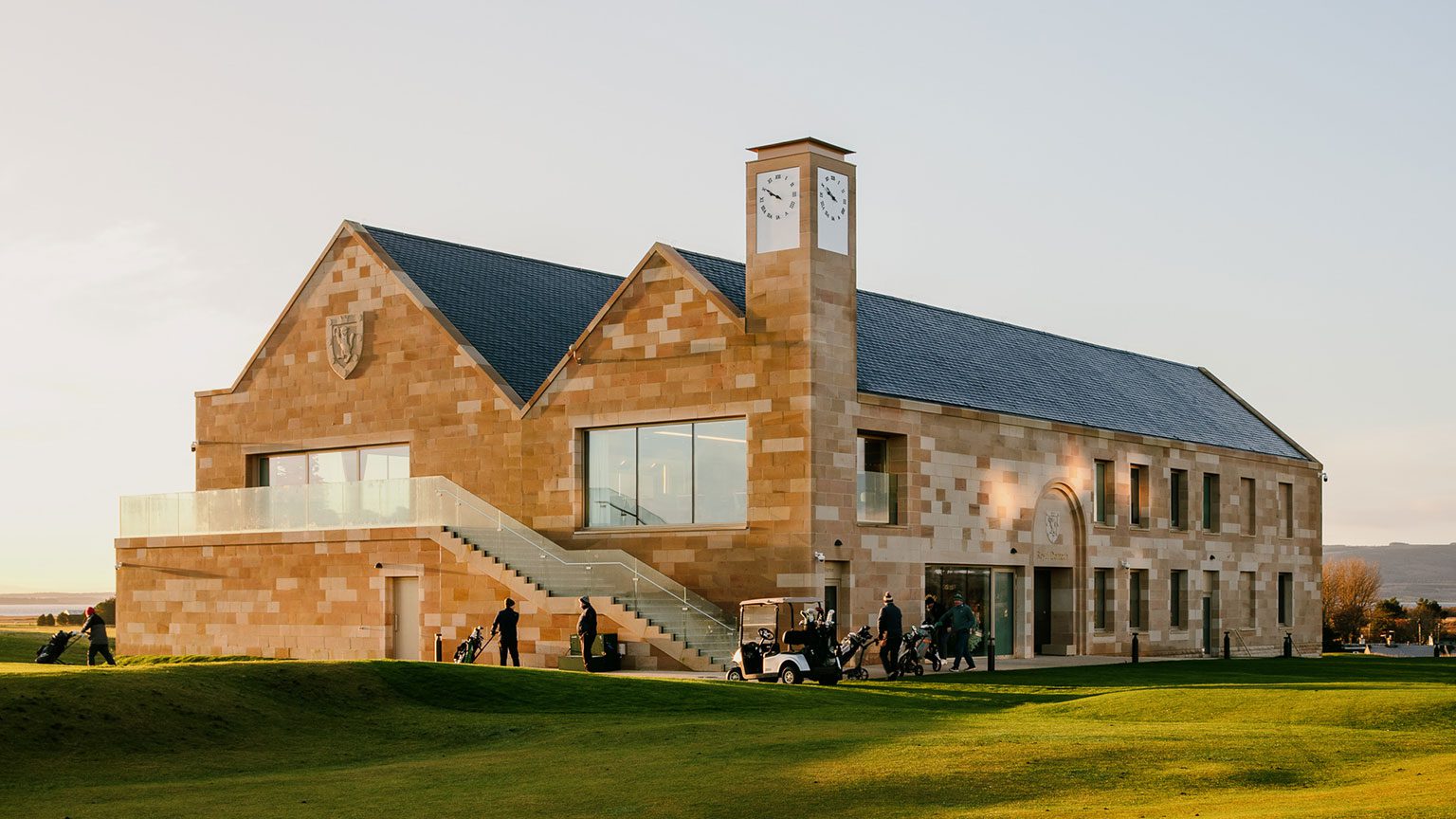
Balancing Heritage with Modern Expectations
The brief extended far beyond replacing an ageing building. The new clubhouse needed to strengthen Royal Dornoch’s international reputation while remaining deeply rooted in the historic Highland town of Dornoch. It also needed to function as a year-round community asset capable of hosting local events alongside world-class golf.
Our design was guided by five themes: Arrival and Anticipation, Journey and Movement, Concealing and Revealing Views, Heritage, and Identity. Together these shaped an architectural experience that celebrates the club’s history while enhancing every stage of the visitor journey.
The three-storey clubhouse combines a professional shop, changing facilities, exhibition spaces, restaurants, lounges and flexible hospitality areas. Carefully considered circulation culminates in panoramic views across the Championship Course, Dornoch Firth and the historic town beyond.
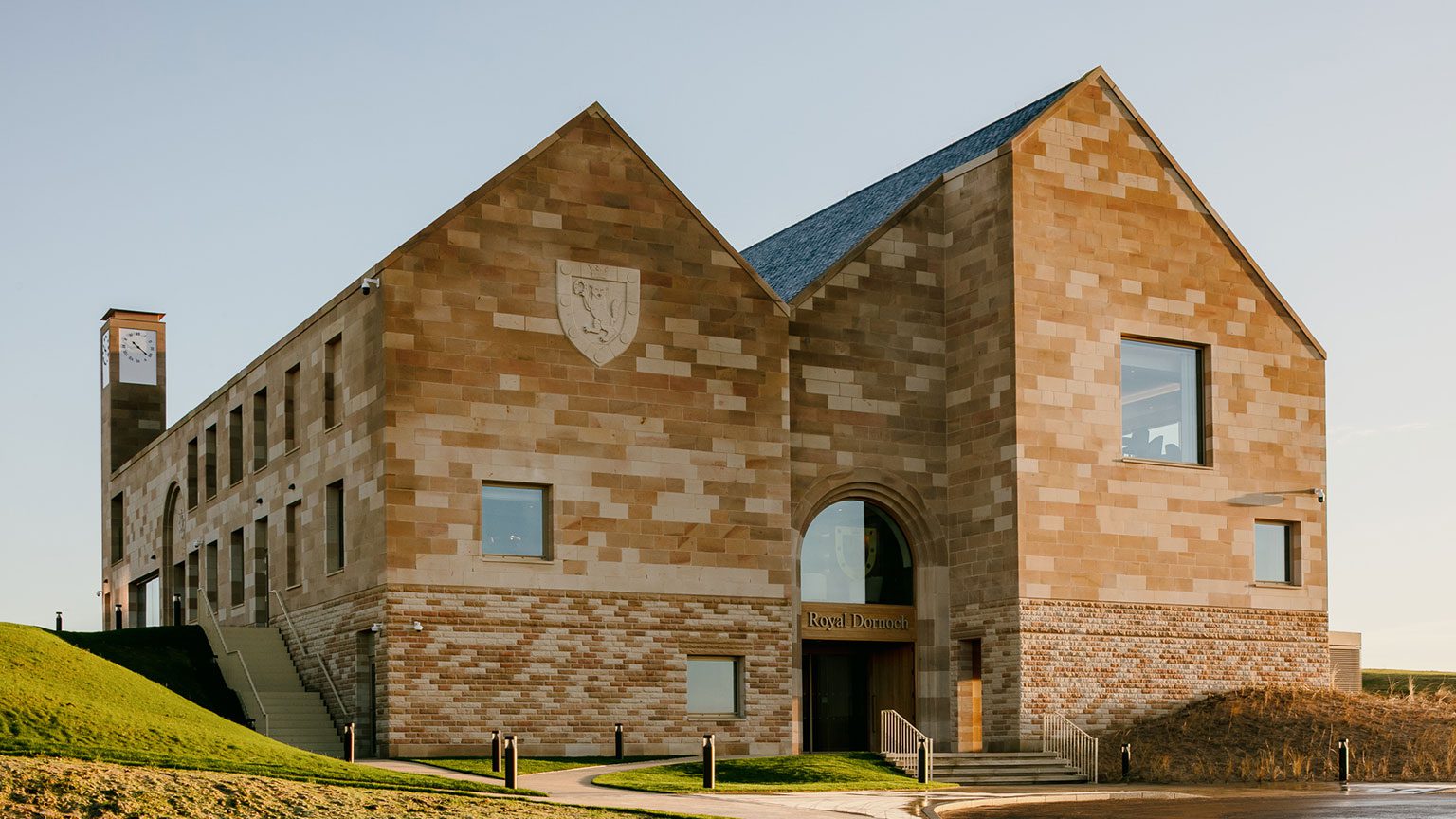
Partnership Through Every Stage
Close collaboration with Royal Dornoch’s leadership, members, local community and specialist project team informed the design from competition stage through to completion. Interior workshops, presentations and member engagement ensured the building reflected the Club’s identity while building confidence in the vision.
When the project paused for almost eighteen months during COVID-19 and subsequently faced significant construction inflation, Keppie worked alongside the client, quantity surveyor and contractor to protect the integrity of the design. Transparent communication, evidence-led cost management and collaborative decision-making enabled the project to move forward with the original ambition largely intact.
Sustainability Built In
Sustainability informed every major design decision. Rather than treating renewable technologies as additions, they were fully integrated into the architecture.
A ground source heat pump, battery storage system and whole-roof photovoltaic array—colour matched to traditional slate—combine with a high-performance building envelope to achieve an EPC A rating and a carbon intensity of just 8.02 kgCO₂/m²/year, demonstrating that low-carbon performance and heritage-sensitive design can work together.
Lasting Value
The completed clubhouse delivers far more than a hospitality venue. It provides a flexible civic building supporting community organisations, local events and international visitors throughout the year, while creating employment opportunities and investment within the Highland economy.
Royal Dornoch has since been selected by The R&A to host the 2028 Curtis Cup, placing both the Championship Course and the new clubhouse on the world stage.
As the client reflected: “Now, I truly believe we have a clubhouse to match the reputation of our beloved links.” The project demonstrates how partnership-led design, technical excellence and long-term thinking can create architecture that strengthens place, supports communities and enhances one of Scotland’s most iconic sporting destinations.